|
|
Last
Modified on
Jul 13, 2026
The Horizontal Gaze Nystagmus (HGN) test is a field sobriety test used by Mississippi law enforcement during DUI investigations. During the test, an officer watches for involuntary eye jerking while the driver follows a moving object. However, in Mississippi, HGN results cannot be used before a jury as proof that a driver was impaired or intoxicated. Under Young v. City of Brookhaven, HGN evidence may only be used for probable-cause purposes, such as supporting an arrest or chemical test request. Because of this limitation, HGN evidence can still be challenged based on how the test was administered, whether the officer followed proper procedures, the officer’s training, possible medical conditions affecting the eyes, and whether the test was misrepresented as scientific proof of impairment.
You may have found yourself in a situation where you need a better understanding of HGN testing and evidence in Mississippi DUI cases. The Horizontal Gaze Nystagmus (HGN) test is the standard field sobriety test law enforcement officers perform when they pull someone over on suspicion of driving under the influence (DUI).
This test is often cited in DUI cases as evidence of impairment, as it is part of the National Highway Traffic Safety Administration’s (NHTSA) standardized field sobriety test battery. Due to its nature, it’s important to have a better understanding of how reliable these tests are and whether or not they are admissible in Mississippi courts.
What Is HGN Testing?
The involuntary quivering of the eyes that occurs as the eyes gaze to the side is referred to as HGN. Under normal circumstances, this jerking is minimal. However, when a person is impaired by alcohol or certain drugs, such as in cases of boating under the influence (BUI), the jerking becomes more pronounced and occurs at smaller angles of deviation.
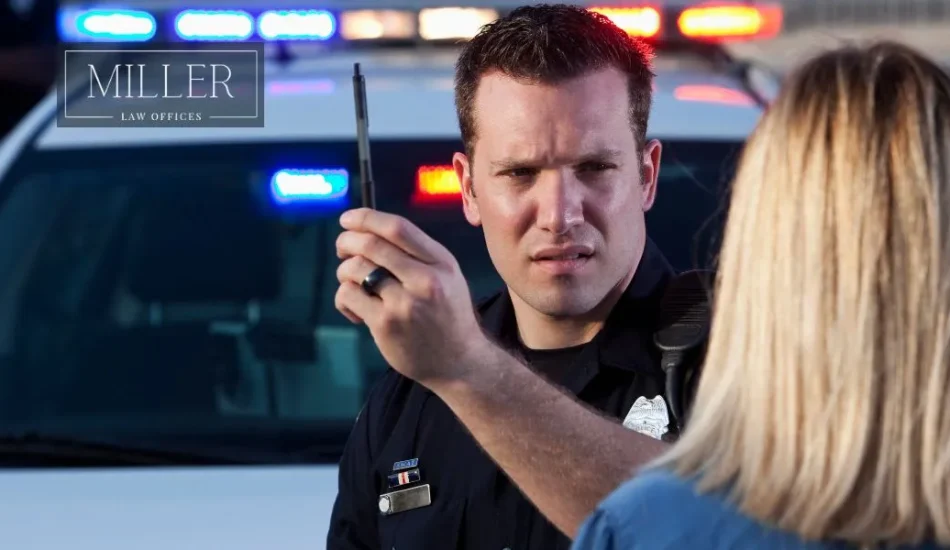
The officer instructs the subject to follow a pen or a flashlight with their eyes only during an HGN test. Then, the officer will observe the eyes for three specific clues in each eye. These include:
- Lack of smooth pursuit
- Distinct nystagmus at maximum deviation
- Onset of nystagmus prior to 45 degrees
NHTSA guidelines state that there is a high likelihood that the individual’s BAC is above the legal limit of 0.08% or higher if four or more clues are observed during this test. The reliability of this test hinges on proper administration, and it is important to remember that this test is not a direct measure of BAC.
HGN Testing in Mississippi: Legal Considerations
Over the past two decades, Mississippi courts have addressed HGN evidence in DUI cases with increasing scrutiny. The state follows the Mississippi Rules of Evidence, which require professional testimony on scientific matters to be both reliable and relevant.
In Young v. City of Brookhaven, the Mississippi Supreme Court held that the HGN test is not generally accepted within the scientific community and cannot be used as scientific evidence to prove intoxication or to show impairment. The Court ruled that the only allowable use of HGN results is to help establish probable cause to arrest a driver and to request a breath or blood test, rather than to prove impairment in front of the jury.
Because HGN cannot be presented to the jury as proof of intoxication, its role in a Mississippi DUI case is limited to the probable-cause stage. Even at that stage, how the test was administered still matters, including whether the officer was properly trained in the standardized method, whether the test was conducted under appropriate conditions, and whether the officer can testify to the specific procedures followed and the clues observed.
Source: Young v. City of Brookhaven, 693 So. 2d 1355, 1360-61 (Miss. 1997).
Accuracy and Reliability
While the National Highway Traffic Safety Administration has conducted studies on the HGN test, its reliability has often been questioned. Some research indicates that the HGN test may only be 15% reliable as an indicator of impairment. These findings highlight concerns about the test’s effectiveness in accurately determining intoxication levels.
Challenges to HGN Evidence
Since HGN tests are not foolproof, there are several challenges that a skilled defense attorney may present to the court during these particular cases. These include:
- Improper Administration: Officers must follow precise procedures during the HGN test. These include checking for medical conditions that may affect the eyes, ensuring the subject’s head remains still, and positioning the stimulus at the correct distance and height. Deviations from the protocol can render the results unreliable.
- Lack of Officer Qualifications: To testify about HGN observations, an officer must be trained in the standardized method. Courts have excluded HGN testimony when the officer could not demonstrate sufficient training or did not recall the specific steps taken during the test.
- Medical Conditions and Non-Alcohol Causes: Nystagmus can be caused by factors unrelated to alcohol or drugs, including inner ear disorders, certain medications, fatigue, and neurological issues.
- Misrepresentation of the Test’s Accuracy: Some prosecutors may attempt to characterize the HGN test as highly accurate or scientific. However, the scientific community is divided on how reliable HGN is, particularly when used without other pieces of evidence like breath or blood tests.
FAQs
Is HGN Admissible in Court?
Mississippi treats HGN differently from many other field sobriety tests. Under Young v. City of Brookhaven, HGN results may be used only for probable-cause purposes and should not be admitted before the jury as proof that a driver was impaired or intoxicated.
How Do You Beat a DUI Charge in Mississippi?
The first thing you should do to beat a DUI charge in Mississippi is hire an experienced DUI defense attorney at Miller Law Offices. You will want to have an understanding of arrest procedures in case you are able to find any procedural errors. Challenge evidence in court and try to suppress invalid findings. Explore other options, such as a plea deal or diversion programs. It is always important to be informed of your rights and comply with any legal requirements.
What Is the Horizontal Gaze Nystagmus Test for DUI?
The HGN test is a field sobriety test used by police to detect impairment from alcohol or drugs. It involves observing the involuntary quivering of the eyes as they follow a moving object. Nystagmus is more pronounced when a person is intoxicated, making the test a tool for identifying impaired drivers during DUI stops.
What Are the New DUI Laws in Mississippi?
As of July 1, 2024, the DUI laws in Mississippi have become stricter. There is a stricter sentence for any DUI that causes injury or death. The lookback period has also changed in reference to repeat offenses. Commercial drivers may now face felony charges for a DUI. The courts can also require ignition interlock devices for longer periods of time.
Can Flashing Police Cruiser Lights Affect the Results of an HGN Test?
Yes. Flashing, strobe, or rotating emergency lights, as well as moving traffic, can create visual stimuli that may trigger optokinetic nystagmus, an involuntary eye movement unrelated to alcohol or drug impairment. Because of this, officers are generally trained to administer the Horizontal Gaze Nystagmus (HGN) test in a way that minimizes distractions, such as positioning the subject away from flashing lights and moving traffic when practical. If the test is performed while a driver is facing these visual stimuli, the defense may argue that the conditions affected the reliability of the HGN results rather than indicating impairment.
Contact Us Today
For individuals facing DUI charges in Mississippi, HGN evidence should never go unchallenged. A DUI conviction can have severe consequences. By understanding the limitations of HGN and leveraging them in court, a knowledgeable DUI defense attorney can make a difference in the outcome of the case. If you or someone you know has found themselves in a situation similar to this, it is time to get in contact with Miller Law Offices.
Mississippi DUI Resources:
 Charged with a DUI in Mississippi? Your license suspension clock may already be running.